As energy needs are rapidly growing and electricity costs continue to rise, more people are looking for reliable alternatives to the traditional power grid. One of the most effective solutions is an off-grid solar system, which allows you to generate, store, and use your own electricity without depending on government supply.
Unlike grid-tied systems, which require a connection to the local utility company, an off-grid solar system works completely independently. It is especially beneficial in remote areas where access to the grid is unavailable or unreliable, making it a popular choice for rural households, farms, commercial establishments, and eco-friendly homes.
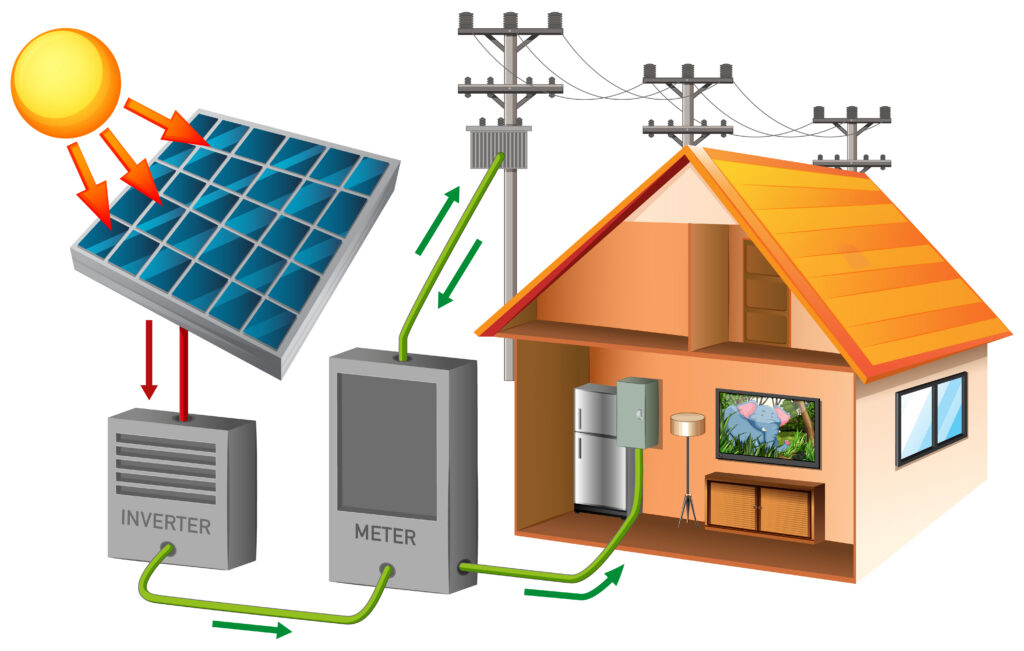
An off-grid solar system is a standalone power system that uses solar panels, batteries, and an inverter to generate and store electricity for day and night use. It provides complete energy independence by ensuring that you have uninterrupted electricity, even during power cuts or in areas with no grid connection.
In simple terms, this system allows you to live “off the grid” by harnessing the power of the sun.
This device ensures that the batteries are charged properly and prevents overcharging, which can damage the battery bank.
Batteries are the heart of an off-grid system. They store the excess power generated during the day and supply electricity during the night or cloudy days. Lithium-ion batteries are preferred due to their long life and efficiency, though lead-acid batteries are a cost-effective alternative.
Since most home appliances run on AC power, the inverter converts the DC electricity from batteries into usable alternating current (AC).
Backup Generator (Optional)
In regions with long rainy or winter seasons, a generator can serve as a backup to charge batteries when solar power is insufficient.